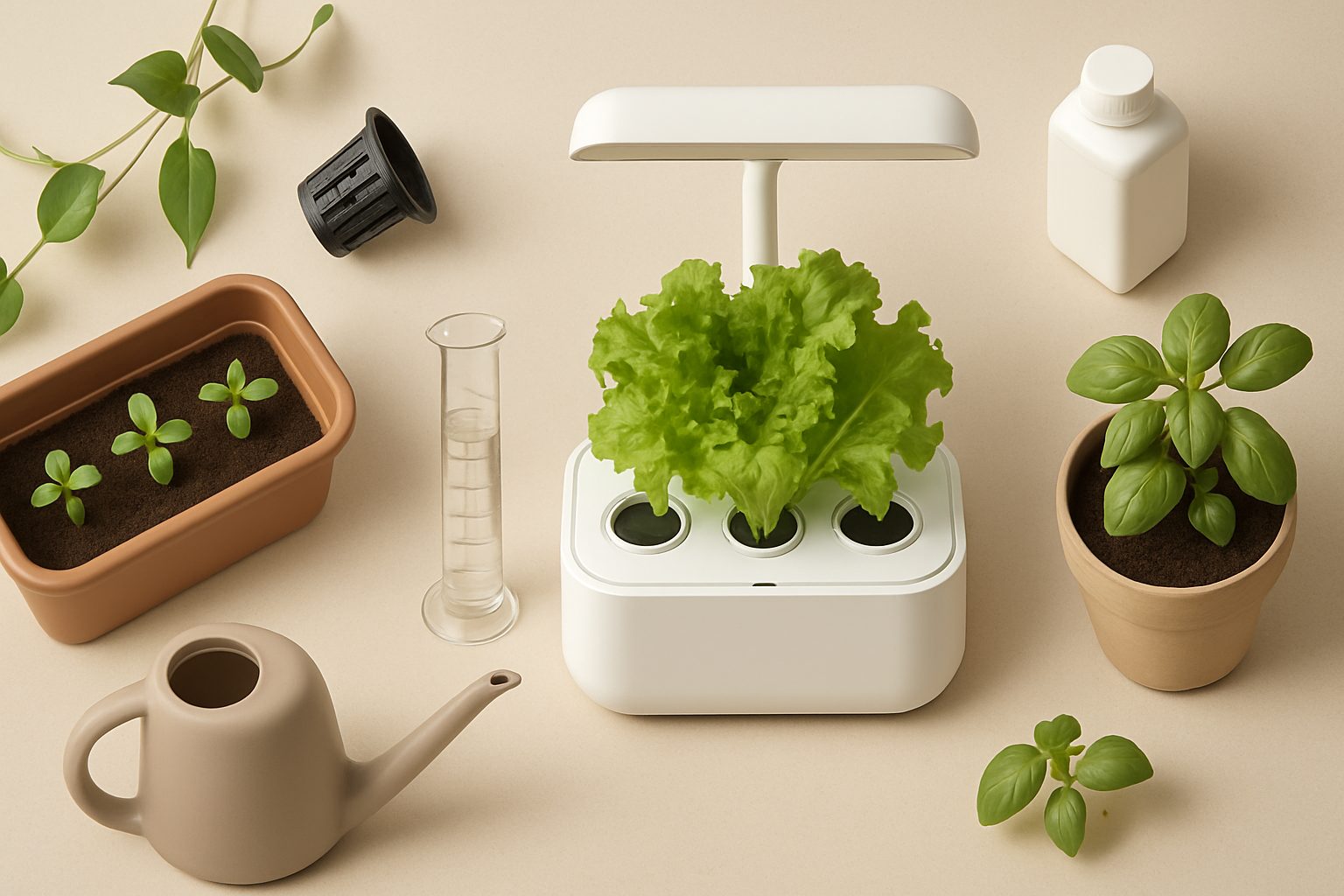
How to Grow Lettuce Hydroponically in the UK: A Complete Year-Round Growing Guide
Hydroponics isn't some space-age technology reserved for commercial farms. Growing lettuce hydroponically at home is genuinely straightforward, especially in the UK where cool growing conditions actually suit lettuce better than most warm-season crops. You'll harvest crisp, clean leaves in 4–6 weeks using far less water than soil gardening, and your yields will be substantially higher per square metre. This guide covers exactly what you need to know to grow lettuce year-round, indoors or outdoors, from seed to harvest.
Why Lettuce Thrives in Hydroponics
Lettuce is the ideal starter crop for hydroponic growers. Unlike fruiting plants such as tomatoes or peppers, lettuce doesn't demand high nutrient concentrations, bright flowering light, or precise heat control. It tolerates the slightly lower light levels common indoors and grows happily in water-based systems.
More importantly, hydroponic lettuce eliminates soil-borne pathogens that cause damping-off and fungal issues. No splashing mud on leaves, no grit in your salad. The water stays clean and circulates directly to the roots. For UK growers especially, this means fewer disease problems during damp autumns and winters—a genuine advantage over outdoor soil beds.
Best Lettuce Varieties for Hydroponics
Avoid overwintering or heading varieties like Iceberg; they're slow and need substantial space. Instead, choose loose-leaf or butterhead types bred for cutting:
- Salad Bowl — quick, open habit, tolerates partial shade
- Lollo Rosso — colourful, crisp, 40–45 days to harvest
- Oakleaf — decorative, excellent in small systems
- Batavia — intermediate between cos and butterhead, reliable
- Nureele — Japanese variety, heat-tolerant for summer
Most of these reach harvestable size in 30–40 days from seed. Sow every two weeks for continuous harvests.
Systems That Work Best for Lettuce
The three main hydroponic systems all grow good lettuce. Choose based on your space and budget:
Deep Water Culture (DWC) — roots dangle directly into oxygenated water. Simple, cheap, perfect for 4–8 plants. Buy a basic aquarium air pump and air stone; keep the water cool (16–18°C). Lettuce flourishes here.
Nutrient Film Technique (NFT) — a thin film of water flows past roots in gutters. More space-efficient than DWC, suits larger setups. The flow rate must remain steady—power cuts and blockages are the main risks.
Flood and Drain (Ebb and Flow) — trays flood then drain on a timer. More forgiving than NFT, easier to manage multiple crops. Works well with hydroton pellets or rockwool.
Avoid misting systems for lettuce; they waste nutrients and encourage disease on the leaves.
Timeline: From Seed to Harvest
Weeks 1–2: Germinate seeds in rockwool plugs or jiffy pellets, kept moist (not waterlogged) and warm (20–22°C). Most lettuce seeds germinate in 7–10 days.
Week 3: Transplant seedlings into your hydroponic system once they have two true leaves. Lower the water temperature to 16–18°C. Start the air pump (or nutrient circulation) immediately.
Weeks 4–6: Monitor pH and nutrient levels (see below). Leaves expand rapidly. Thin weaker seedlings if you're overcrowded.
Week 6+: Begin harvesting outer leaves once the plant is 4–6 inches tall. You can harvest continuously for weeks, or cut the entire head at once.
In winter, growth slows slightly—expect 45–50 days instead of 35–40. In summer, heat can bolt lettuce prematurely; use shade cloth if temperatures exceed 22°C.
Water Quality: EC and pH
This is the critical bit. Get it right and lettuce grows flawlessly.
pH: Keep it between 5.5 and 6.5. Drift above 6.8 and you'll see iron deficiencies (yellowing new growth). Drift below 5.2 and manganese toxicity appears. Check pH twice weekly with a calibrated probe or pH test strips; adjust with pH-up (potassium hydroxide) or pH-down (phosphoric acid).
EC (Electrical Conductivity): This measures total dissolved salts. Lettuce is a light feeder—run between 1.0 and 1.4 EC. That's significantly lower than fruiting plants. Start at 1.2 EC when you change the water, then let it drift upward slightly as water evaporates. If it climbs above 1.6, dilute with fresh water.
Calcium: Lettuce rarely needs supplemental calcium in hydroponic nutrient solutions, but if you see tip-burn (brown, papery edges on young leaves), it's calcium-related, not overwatering. Lower the EC and increase air circulation.
Change your reservoir completely every 3–4 weeks. Partial water changes don't remove accumulated salts.
Temperature and Lighting
Lettuce grows best at 16–20°C. This is good news for UK growers, especially in autumn and winter. Temperatures above 24°C slow growth and encourage bolting (flowering and bitterness).
Indoors, you don't need powerful grow lights. Lettuce needs roughly 12–14 hours of light at 200–300 µmol m⁻² s⁻¹ (far lower than tomatoes). A basic LED panel above your system is enough, or position near a bright window. Outdoors, lettuce tolerates partial shade—useful when summer sun is too fierce.
Where to Source Lettuce Seed in the UK
Buy quality seed from these reliable suppliers:
- Mr. Fothergill's — wide range, consistently fresh
- Thompson & Morgan — specialises in unusual varieties
- Suttons Seeds — heritage varieties and modern hybrids
- Kings Seeds — competitive pricing, good germination rates
Buy fresh seed each year if possible. Old seed has poorer germination rates. Store in a cool, dry place until you're ready to sow.
Common Problems and Fixes
Algae bloom: Green water reduces oxygen availability. Cover your reservoir and reduce light exposure. Black plastic sheeting works. Algae itself doesn't harm plants.
Wilting despite wet roots: Usually low oxygen (dead air pump) or root rot from warm, stagnant water. Check your air stone, replace if blocked. Lower the temperature immediately.
Powdery mildew: Rare indoors, more common in outdoor summer systems with high humidity. Improve air circulation; add a small desk fan. Never spray fungicide on edible leaves.
Sparse, pale growth: Check your EC and pH first. More likely a nutrient or pH drift than underfeeding.
Growing Year-Round
Outdoor spring and autumn (March–May, September–November) are peak seasons in the UK. Summer requires shade and cooler water; winter growth is slow but steady under lights indoors.
Spring lettuce is quickest (30–35 days) and most vigorous. Winter indoors under LEDs is slowest but still manageable at 45–50 days. Plan accordingly and stagger your sowings.
Hydroponically grown lettuce is genuinely superior to supermarket plastic-wrapped heads—cleaner, fresher, and ready to eat straight from harvest. Once you dial in your pH and EC, the system virtually runs itself.
More options
- Home Hydroponic Systems (Amazon UK) (Amazon UK)
- Full-Spectrum LED Grow Lights (Amazon UK) (Amazon UK)
- Hydroponic Nutrients & Fertilisers (Amazon UK) (Amazon UK)
- Complete Grow Tent Kits (Amazon UK) (Amazon UK)
- Hydroponic Air Pumps & Air Stones (Amazon UK) (Amazon UK)