How to Grow Basil Hydroponically at Home UK: Foolproof Guide for Year-Round Harvests
Growing basil hydroponically is one of the easiest wins for UK home growers. Unlike soil cultivation, where basil struggles with winter cold and summer slugs, hydroponic systems keep your plants growing consistently indoors—meaning fresh leaves whenever you need them, not just summer months. The method is forgiving enough for beginners but rewarding enough that you'll wonder why you ever fought with compost.
Why Hydroponic Basil Works for UK Homes
Basil is naturally suited to hydroponic growing. Its root system is shallow and fibrous, it grows quickly (ready to harvest in 4–6 weeks from seed), and it responds well to consistent nutrient delivery. Most importantly, it tolerates the cooler UK indoor environment better than you'd expect, as long as you meet its basic light and temperature needs.
The real advantage is harvesting outside the British summer. You're not dependent on unpredictable weather or dealing with whitefly infestations in July. A simple countertop system with basic grow lights turns basil into a year-round crop.
What You'll Need
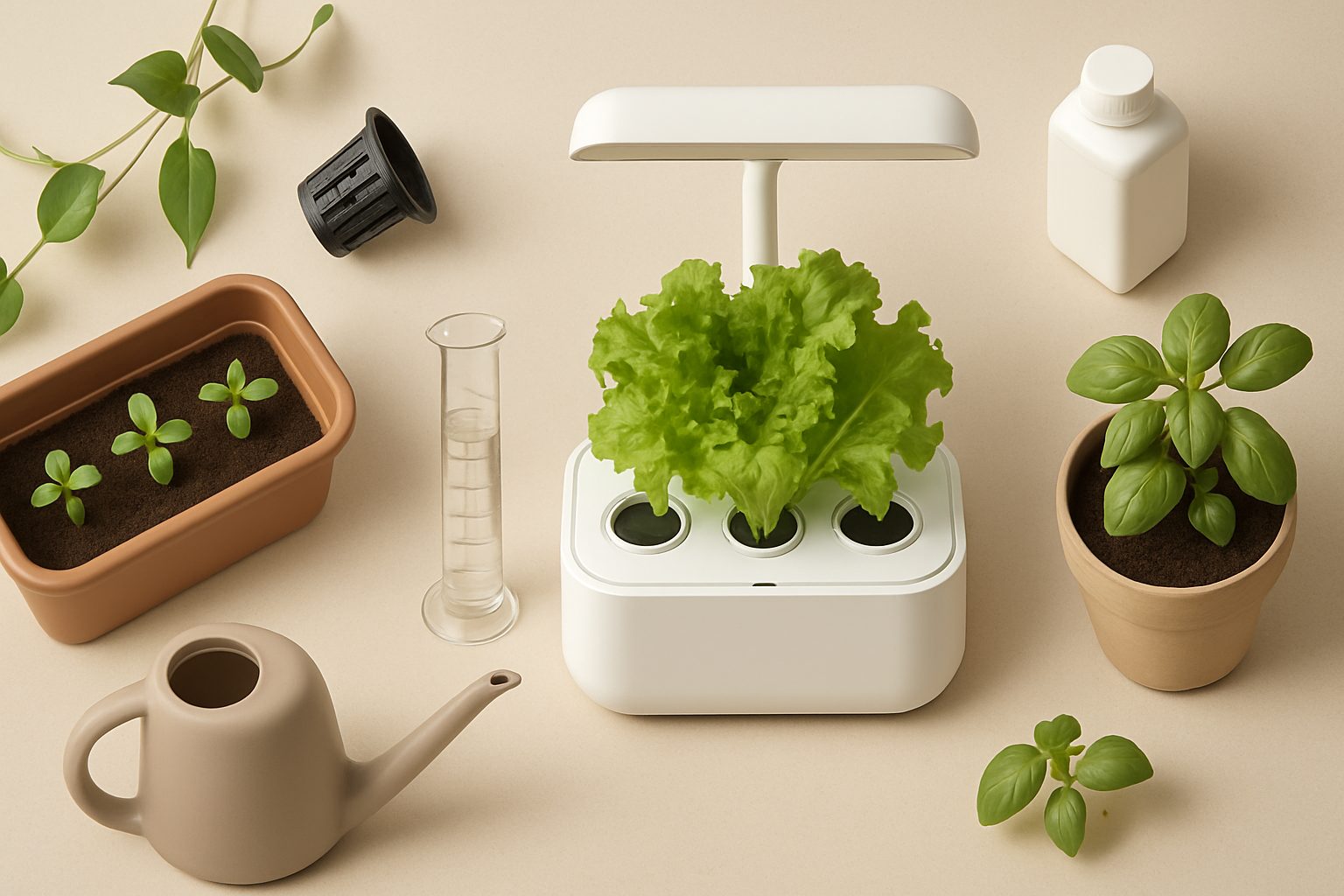
The system itself: A deep-water culture (DWC) system or nutrient film technique (NFT) setup works well for basil. Small countertop systems (like AeroGarden alternatives) are convenient but pricier. Budget-conscious growers often build basic DWC using a storage container, air pump, and air stone—perfectly effective and under £30. Pre-made ebb-and-flow systems are also good if you want something mid-range.
Growing medium: Hydroton (expanded clay pellets) or rockwool cubes. Both work equally well. Hydroton is reusable and lasts years; rockwool is cheaper upfront.
Nutrients: Use a general-purpose hydroponic nutrient solution designed for vegetables and herbs. UK-based brands like Canna and Dutch Master are reliable, though supermarket hydroponics nutrients work fine too.
Lights: A basic LED grow light (full-spectrum, 30–50W for small systems) positioned 15–30cm above plants. Basil needs 14–16 hours daily. Cheap Amazon panels work, but Philips Hue or quality brands last longer and run cooler.
Seeds or seedlings: Standard supermarket basil seed works, though Genovese and Siam Queen varieties are particularly vigorous under lights.
Setting Up Your System
Start with seed or transplant? Seeds take 7–10 days to germinate in rockwool or hydroton. If you're impatient, buy basil seedlings from a garden centre and transplant them into your hydroponic setup—they'll establish in days.
Container preparation: Whether you're using a pre-made system or DIY setup, ensure your reservoir holds at least 5 litres if growing 4–6 basil plants. Fill with pH-neutral water (tap water is fine in most UK areas, though some regions benefit from a water filter).
Spacing: Basil plants need about 15cm between each pot site. Crowding them reduces airflow and invites mould. Better to grow fewer plants well than squeeze them in.
Temperature: Maintain 18–24°C. Below 15°C, basil slows dramatically. If your growing space is a cold garage or unheated shed, you'll need a heat mat under the reservoir (£15–25).
Nutrient Solution and Feeding
This is where hydroponic basil differs from soil. You're not fertilising occasionally—you're maintaining a constant, balanced nutrient solution.
Nutrient strength: Mix your hydroponic fertiliser to around EC 1.0–1.2 (electrical conductivity). Most bottles give you a dilution rate (typically 1ml per litre). Start at the lower end; basil doesn't need heavy feeding, and too much nitrogen causes weak, flavourless growth.
pH: Maintain 5.5–6.5. Basil tolerates a wider range than many crops, so don't obsess, but do check weekly with a cheap pH meter. If drift occurs, adjust gradually—never crash it in one go.
Water changes: Every two weeks, drain and refill your reservoir completely. Between changes, top up evaporated water with plain water (not nutrient solution). This prevents salt buildup.
EC monitoring: If you have an EC meter, watch for creep over time. High EC means nutrient concentration is rising; dilute with fresh water.
Light and Temperature
Basil won't produce flaky, weak growth indoors if you get light right. Aim for 12–14 hours minimum; 16 hours is ideal but electricity bills add up.
Position your grow light 20cm above young seedlings, raising it as they grow. At flowering stage (which you want to delay for leaf production), move the light slightly further away.
Temperature matters more than many growers realise. At 20°C, basil grows steadily. Drop to 15°C, and it almost stops. Keep your growing space insulated and avoid cold draughts, especially if you're by a window.
Common Problems and Solutions
Algae in the reservoir: Green water is harmless to basil but unsightly and wastes light energy. Cover exposed water surfaces with black plastic and keep the reservoir dark. Some growers add a small aquarium heater to prevent stagnation, though it's not essential.
Slow growth despite light and warmth: Usually low nutrient strength or pH drift. Check your EC and pH first; adjust before adding more fertiliser.
Yellowing lower leaves: Normal when plants are actively growing. Remove them. If all leaves yellow, your nitrogen is too low—increase nutrient strength slightly.
Wilting despite wet roots: Check your air pump is working. Dead air pumps cause root rot in weeks. Listen for a hum; if silent, replace it (£10–20).
Harvesting and Encouraging Bushier Growth
Start harvesting when plants have 6–8 true leaves. Pinch out the top growing tip; this forces the plant to branch. Two weeks later, you'll have a bushier plant with more harvest points.
Always leave at least 3–4 leaf nodes on the stem when harvesting. This keeps the plant healthy and producing.
Properly maintained, a single basil plant gives you continuous harvests every 2–3 weeks for 3–4 months before flagging and needing replacement.
Year-Round Growing
The UK's short winter days are basil's only real enemy indoors. A timer ensures your lights run 14–16 hours daily, mimicking longer daylight. Swap old plants for fresh seedlings every 4 months, and you'll never be without basil.
Many growers keep two or three small systems staggered—when one finishes, the next is ready. This approach removes the "feast or famine" of traditional gardening.
Hydroponic basil pays for itself within a season if you'd otherwise buy fresh herbs at £1.50 per pack weekly. More importantly, you'll taste the difference—leaves are cleaner, greener, and more flavourful than shop-bought, picked minutes before use.
More options
- Home Hydroponic Systems (Amazon UK) (Amazon UK)
- Full-Spectrum LED Grow Lights (Amazon UK) (Amazon UK)
- Hydroponic Nutrients & Fertilisers (Amazon UK) (Amazon UK)
- Complete Grow Tent Kits (Amazon UK) (Amazon UK)
- Hydroponic Air Pumps & Air Stones (Amazon UK) (Amazon UK)