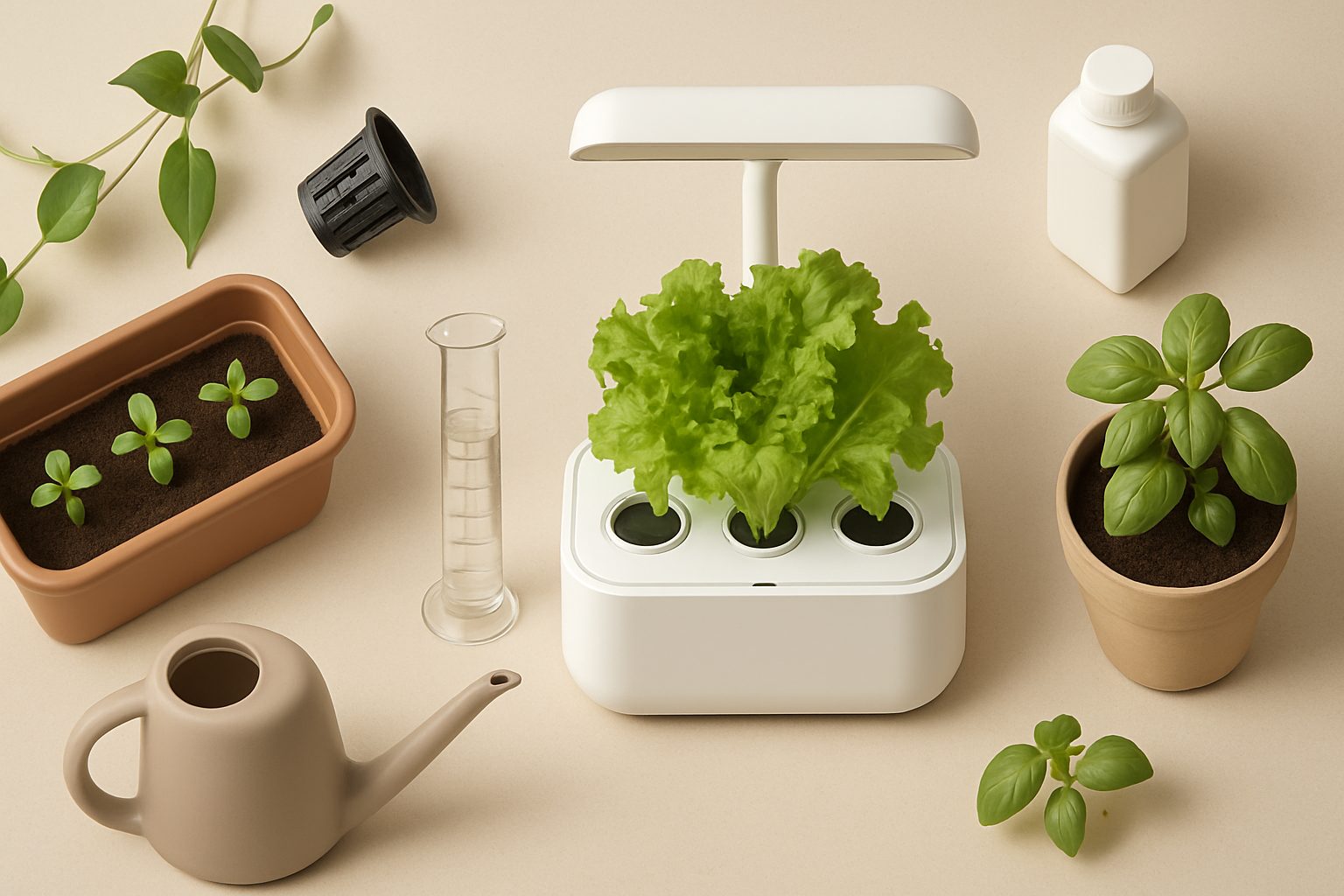
Best Hydroponic Systems for Tomatoes and Peppers UK (2025): High-Yield Picks Tested
Growing tomatoes and peppers hydroponically transforms your yield. Soil-free cultivation delivers faster growth, denser fruiting, and better disease control than traditional gardening—critical advantages if you're growing at scale or maximising a compact space. But not all hydroponic setups suit heavy-feeding fruiting crops. Here's what actually works for tomatoes and peppers in the UK climate.
Why Hydroponics for Tomatoes and Peppers?
Indeterminate tomato varieties and perennial pepper plants thrive in hydroponic systems because they demand consistent nutrient availability and precise pH management. Traditional soil often leads to nutrient lockout, uneven ripening, or calcium deficiency (blossom-end rot). Hydroponic growers typically see 20–30% higher yields per plant and earlier harvests.
The UK's variable weather is another factor. A greenhouse-based hydroponic setup shields your plants from rain damage, mildew, and unpredictable temperature swings. You control everything: light hours, nutrient strength, and root-zone temperature.
That said, hydroponics requires more initial investment and ongoing attention than soil gardening. You'll need reliable electricity for pumps and lighting, and a power cut or equipment failure can stress plants quickly.
Deep Water Culture (DWC) vs. Other Systems for Fruiting Crops
DWC is the simplest and most popular choice for tomatoes and peppers. Plants sit in net pots above a nutrient solution, roots suspended in oxygenated water. An air pump (like those used in aquariums) keeps dissolved oxygen high, preventing root rot and promoting vigorous growth.
DWC excels because:
- Minimal moving parts—fewer failure points than drip or NFT systems
- Roots absorb nutrients constantly, accelerating growth during the fruiting stage
- Easy to monitor and adjust pH and EC (electrical conductivity)
- Scalable from single-plant hobby setups to 20+ plant systems
The downside: if your air pump fails, plants deteriorate within hours. A backup battery-powered pump or redundant system is wise if you're serious about yield.
Nutrient Film Technique (NFT) and flood-and-drain systems are less forgiving for heavy feeders like peppers. Fruiting plants need sustained nutrient contact; intermittent film or periodic flooding often causes inconsistent growth.
Pairing DWC with Grow Tents
A 1.2 × 1.2 m grow tent houses two mature indeterminate tomato plants or three pepper plants comfortably. Taller 2 m models work better for tomatoes, which can reach 1.8+ metres. Ensure the tent fabric is diamond-mylar (98% reflectivity minimum) to capture every photon.
Bundle a DWC system with a tent and you've locked down your environment: humidity, temperature, CO₂, and light all in one controlled space. UK growers benefit enormously here because you're not reliant on erratic spring sunshine.
Tent sizing for fruiting plants:
- 1.2 × 1.2 m: 2–3 plants (peppers), 1–2 plants (indeterminate tomatoes)
- 1.2 × 2.4 m: 4–6 plants (peppers), 3–4 plants (tomatoes)
Larger tents demand better airflow and cooling; UK summers rarely exceed 25–28°C indoors, but a small clip fan or inline extractor prevents stagnant air and reduces mildew risk.
Lighting Requirements
Tomatoes and peppers need 14–16 hours of light daily during growth and fruiting. UK winter daylight (8–9 hours) is insufficient; supplemental lighting is essential unless you're running a summer-only crop.
Full-spectrum LED panels are now the standard. Look for 600–1000 W output for a 1.2 × 1.2 m tent. Avoid cheap red–blue blurple LEDs; broad-spectrum (3000–6500 K colour temperature) panels deliver better fruiting and faster flowering.
Running costs are moderate: a 600 W panel draws roughly 120–150 W electricity, costing ~£35–50 per month if on 16 hours daily. Consider dimmable models; you can reduce intensity during UK summer when ambient light is strong, or ramp up in winter.
Nutrients for Tomatoes and Peppers
Hydroponic vegetables need complete nutrient solutions: nitrogen, phosphorus, potassium, plus calcium, magnesium, sulphur, and trace elements. Many UK suppliers stock two-part or three-part solutions formulated specifically for fruiting crops. A few options:
Three-part systems (nitrogen, phosphorus, micronutrients kept separate) let you adjust N:P:K ratios as plants transition from vegetative to fruiting phase. Slightly higher phosphorus and potassium during flowering and fruiting encourages heavier yields.
Two-part solutions are simpler; mix A and B in a fixed ratio. They work well if you're not fine-tuning nutrition. Check the label: EC should be 1.2–1.6 for fruiting peppers and tomatoes.
Starting EC too high (over 1.8) causes nutrient burn; too low (under 0.8) results in pale leaves and slow growth. Check pH weekly—tomatoes and peppers prefer 5.8–6.2—and maintain strict hygiene to prevent algae blooms and pathogens.
Practical Setup Checklist
For a solid 1.2 × 1.2 m DWC-plus-tent system, budget for:
- Grow tent (100–150 cm height minimum): £150–300
- DWC bucket kit or DIY components (25–50 litre reservoir): £80–200
- Air pump and air stone: £20–40
- LED panel (600 W equivalent): £200–400
- Nutrients, pH buffer, EC meter: £40–80
- Exhaust fan or extractor: £30–80
Total: roughly £550–1,100 depending on quality.
A backup air pump (£15–20) and spare nutrients (£20) are cheap insurance. Many UK growers regret skipping these when a fault develops mid-season.
Honest Caveats
Hydroponics demands consistency. Holidays or erratic watering routines don't exist here—a system neglected for a few days can collapse. Electricity bills rise noticeably, especially during winter. And if you're new to growing, the learning curve is steeper than soil gardening; expect your first crop to be a trial run.
That said, once you dial in your setup, tomato and pepper yields rival or exceed commercial glasshouse operations. For UK growers keen on high productivity and year-round harvests, DWC in a tent is the most reliable path.
More options
- Home Hydroponic Systems (Amazon UK) (Amazon UK)
- Full-Spectrum LED Grow Lights (Amazon UK) (Amazon UK)
- Hydroponic Nutrients & Fertilisers (Amazon UK) (Amazon UK)
- Complete Grow Tent Kits (Amazon UK) (Amazon UK)
- Hydroponic Air Pumps & Air Stones (Amazon UK) (Amazon UK)