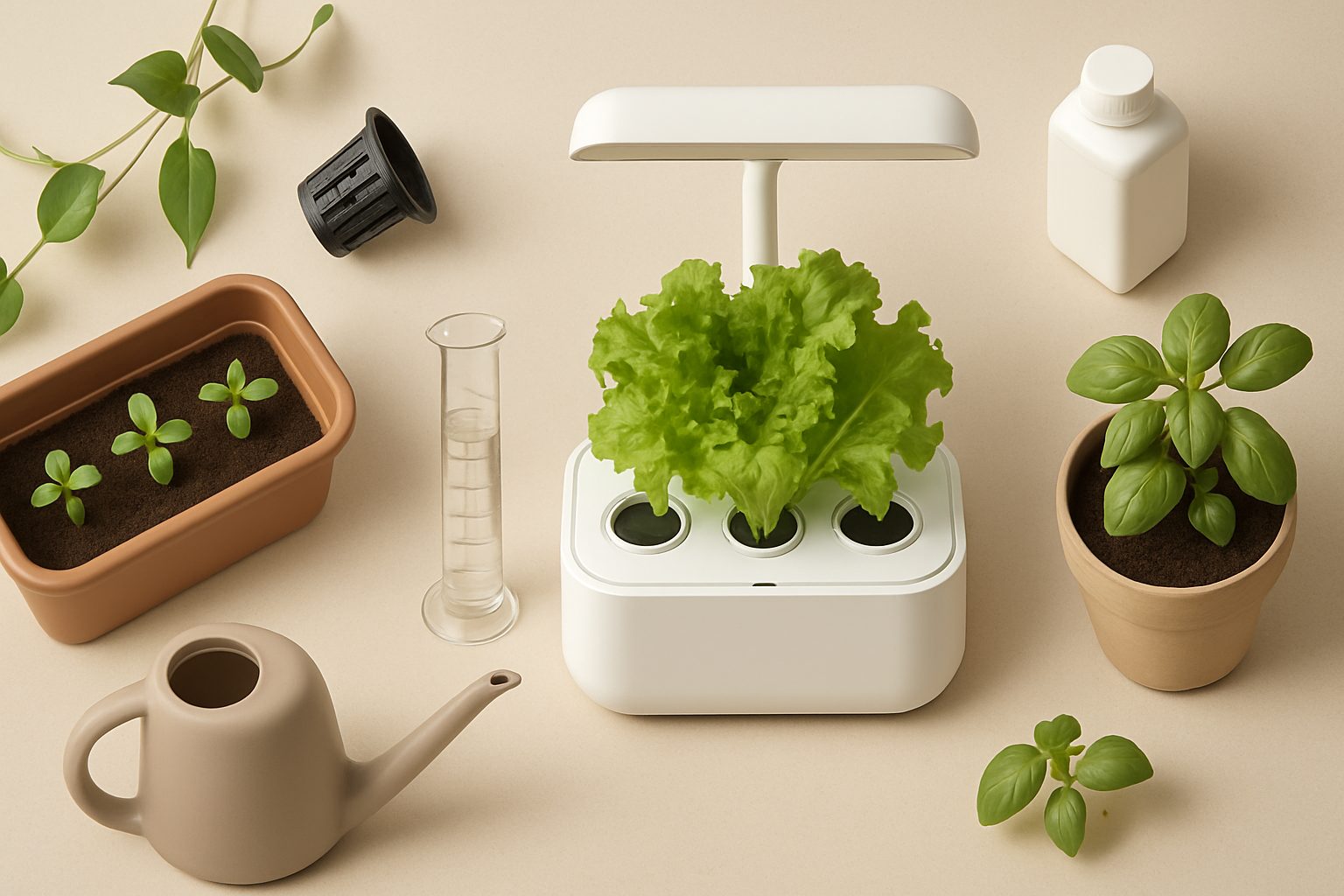
Best Hydroponic Systems for Herbs UK: Grow Basil, Mint & Coriander Indoors Year-Round
Growing herbs hydroponically cuts out the unpredictability of UK weather and seasonal light. With the right system, you'll harvest fresh basil, mint, and coriander year-round from your kitchen counter. The key is choosing a setup that suits your space, budget, and the herbs you actually want to grow.
Why Hydroponic Herbs Beat Traditional Growing
Soil-grown herbs need space, light control, and regular repotting. They're prone to pests and inconsistent growth through winter. Hydroponic systems deliver nutrients directly to the root zone, so plants grow 30–50% faster. You control light, humidity, and nutrient composition entirely, which means faster harvests and more predictable yields.
For herbs specifically, this matters because most culinary varieties (basil, coriander, mint) are fast-growing annuals or perennials that respond well to consistent conditions. You'll be cutting regularly, and hydroponics handles repeated harvesting better than soil, where depletion and compaction become problems.
The drawback: hydroponics requires electricity for pumps and lights, and there's a learning curve with pH and EC (electrical conductivity). But for kitchen herbs, the systems are simple enough that beginners rarely encounter serious issues.
Key Features to Look For
Pod Capacity
Most compact UK-market systems hold 6–12 plant pods. For a household that uses herbs regularly, 6 pods works if you're growing multiple plants of the same herb (say, three basil plants and three mint). If you want variety, look for 9–12 pod systems. Smaller countertop units with 4–6 pods are fine for experimenting, but you'll outgrow them quickly if you're serious about year-round supply.
Light Spectrum
This affects growth speed and flavour. Full-spectrum LED lights (often described as 5500–6500K for vegetative growth) promote leafy growth and maintain flavour. Some systems include adjustable lights; others have fixed white LEDs. For herbs, you don't need expensive horticultural panels — standard full-spectrum LEDs work fine. Aim for at least 30–50 watts per square foot of growing surface.
Tank Size and Water Capacity
Larger reservoirs (5–10 litres) are more forgiving. They stabilise pH and nutrient concentration better, so you're not adjusting parameters daily. Smaller tanks (2–3 litres) mean more frequent monitoring. If you travel or have an irregular schedule, opt for larger capacity.
UK Stock and Support
Check that spare parts (air pumps, filters, nutrients, replacement pods) are available domestically. Some systems are only sold via international suppliers, which complicates troubleshooting and means waiting weeks for replacements.
System Types for Kitchen Herbs
Countertop Deep Water Culture (DWC)
These are simple: plants sit in pods suspended above nutrient solution, with an air pump oxygenating the water. They're cheap (£80–150), compact, and beginner-friendly. The downside is you're managing one shared reservoir, so if one plant gets diseased, it spreads. Good for growing a single herb type or compatible herbs (basil and mint, for example). Popular UK brands offer units with 6–12 pods, built-in LED lights, and automatic water-level sensors.
Nutrient Film Technique (NFT)
Water flows constantly over the roots in shallow channels and drains back to the reservoir. NFT systems are more efficient (less water needed) and reduce disease risk since plants aren't sitting in stagnant solution. They're better for growing mixed herbs because each channel can be isolated if needed. The catch: pump failure means roots dry out quickly, so reliability matters. UK-market NFT kits start around £150–300.
Compact Automated Systems
Some newer systems (marketed as "smart gardens") include app controls, automatic nutrient dosing, and preset growing programs for common herbs. They're more expensive (£200–400+) but require less hands-on management. Useful if you want to set it and mostly forget it.
What Works Best for Common Kitchen Herbs
Basil grows vigorously and tolerates crowded conditions. It's ideal for starting out. It prefers warmer water (18–22°C) and benefits from regular harvesting.
Mint is nearly impossible to kill hydroponically. It spreads quickly, so give it dedicated space or its own system to prevent it overwhelming other plants.
Coriander bolts easily but slower growth in hydroponics than soil actually works in your favour — you get a longer harvest window before it flowers. It prefers cooler conditions (16–20°C) and benefits from good air circulation.
Avoid mixing slow-growers (parsley) with fast ones (basil) in the same system unless you're comfortable adjusting conditions mid-cycle.
Getting Started: Practical Considerations
Start with a single system rather than multiple units. You'll learn maintenance faster and avoid false economies. Budget £100–200 for a reliable starter kit; cheaper options under £80 often cut corners on pumps or light quality.
Nutrient solutions designed for herbs (rather than leafy greens or fruiting plants) are available in the UK; they'll cost £15–30 per bottle and last months depending on system size. pH testing is essential — keep it between 5.5 and 6.5 for herbs.
Ambient temperature matters more than most people expect. Ideally, keep your system between 16–22°C. Kitchens near radiators can fluctuate too much, and garages get too cold in winter without supplemental heating.
Plan for maintenance: changing water fully every 3–4 weeks, cleaning pump intake filters fortnightly, and replacing LED bulbs annually. It's minimal compared to potting soil around your kitchen, but it does require consistency.
The Real Advantage
The genuine win is reliability. Once dialled in, you'll harvest fresh herbs consistently without pest problems, seasonal gaps, or the guesswork of watering. For UK growers tired of basil that wilts by November, hydroponics delivers what soil never quite manages.
More options
- Home Hydroponic Systems (Amazon UK) (Amazon UK)
- Full-Spectrum LED Grow Lights (Amazon UK) (Amazon UK)
- Hydroponic Nutrients & Fertilisers (Amazon UK) (Amazon UK)
- Complete Grow Tent Kits (Amazon UK) (Amazon UK)
- Hydroponic Air Pumps & Air Stones (Amazon UK) (Amazon UK)